About 33 minutes
Buckin' the air — Context and Discussion
Science Fiction Utopias
7,378 recorded words. 2 minutes difference from this book's estimate.
View Gutenberg source #77592
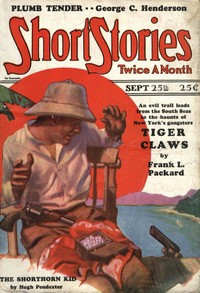
The catalog record for The bar act — Themes and Context provides practical reading context through 8,040 words, 35 min estimated reading time, and 1 detected text section.
The text analysis averages about 18.2 words per sentence, while the detected sections provide another way to judge how the source is divided.
Project Gutenberg metadata also associates the work with “Short stories,” connecting these edition facts with the source record’s subject description.
Explore this collection
These alternatives are selected using recorded categories and estimated reading time.
About 33 minutes
Science Fiction Utopias
7,378 recorded words. 2 minutes difference from this book's estimate.
View Gutenberg source #77592About 42 minutes
Science Fiction Utopias
9,644 recorded words. 7 minutes difference from this book's estimate.
View Gutenberg source #67306About 44 minutes
Science Fiction Utopias
10,087 recorded words. 9 minutes difference from this book's estimate.
View Gutenberg source #77816Search stored excerpts and compare books → Choose by your preferences →
Choices use stored catalog measurements. Estimates vary with reading speed. A shared category is a catalog label, not a claim that two books have the same argument or literary quality.
Search reads excerpt text stored with this catalog and links to its associated Gutenberg record. The connection is stored in the site database; this tool does not recheck that every excerpt is word-for-word identical to that external record. Excerpt search does not cover every chapter and does not verify historical publication dates.
Catalog snapshot checked: 2026-09-26. Coverage: 94 public books, 94 available source excerpts.
Calculated from edition completeness, EPUB availability, text structure and catalogue metadata. Not a user rating.
Total of 100 points, scaled to a 2.5-5.0 range. Editions with an empty description or a missing EPUB file are not scored.
Public-domain source text
The source text is kept in the dedicated reader, separate from this catalogue record and its commentary.
Bud La Mar's The Bar Act opens not with a dusty trail but with a jack rabbit and a mud turtle trading one-liners. The narrator's voice is wry, full of asides about 'Digger Indians' and 'seagoing Eskimos,' and it immediately signals that this rodeo story will be more about comic invention than conventional Western heroics. The catalog lists it under 'Western stories' and 'Cowboys -- Fiction,' but the excerpt's tone is closer to tall-tale humor than to Zane Grey. Len Carter wins prizes by inventing stunts that 'seemed about as simple and devoid of interest to the spectators as a wind-broke horse playing the bagpipes.' The story's engine is novelty, not gunplay.
The catalog subjects—'Western stories,' 'Cowboys — Fiction,' 'Texas — Fiction,' 'Rodeos — Fiction'—suggest a straightforward genre piece. But the excerpt's narrator undercuts every convention. The opening paragraph muses on 'novelty' as a force that 'will crop up in the most unexpected places,' then compares a successful go-getter to a man sleeping 'with one eye open and a cocked six-shooter under his pillow.' The humor is self-deprecating and meta: the narrator tells a fable about a jack rabbit and a mud turtle, then says 'which brings us back to Leonard Carter.' This is not a solemn Western; it is a comic tall tale that winks at its own form.
The title stunt involves Carter attaching an automobile axle to his saddle and spinning on it while his horse runs. The excerpt describes him 'leaning out, grasping the extreme end of the axle' and 'whirling around like a whirligig.' The audience gasps. But the story's real interest is in the chaotic competition that follows. Rivals Slim and Buck improvise with a windmill handle and a broomstick, lashing them to saddles. Buck 'landed on his ear in the dust' and 'limped off the track cursing his luck.' The narrator treats these failures as comedy, not drama. The stunt is a gimmick, and the story knows it.
One of the excerpt's most vivid details is the trick roper's 'double ocean wave rope,' a Manila rope 'balanced so exquisitely at the hondo with fine copper wire' that its owner 'would sooner lose an eye than his beloved trick rope.' When Slim grabs it for his own stunt, the roper chases him 'screaming to high heavens.' Buck then cuts the rope in half with a knife, and the roper 'paled, and fainted dead away.' The scene is played for laughs, but the specificity of the rope's construction—'sixteen-dollar Manila,' 'steel awl could not be driven between them'—shows La Mar's attention to rodeo material culture. The catalog's 'Rodeos — Fiction' subject fits, but the tone is far from earnest.
The Bar Act is a short, fast read—about 8,000 words—that rewards attention to its narrator's voice. The catalog subjects may lead you to expect a straight Western, but the story's humor and self-awareness make it closer to a comic tall tale. Pay attention to the asides: they are the real show.
Odd how a rodeo story can linger past its final page. That comic, self-aware voice in The Bar Act reminded me of another quiet companion, one where animals and logic playfully tangle. Flipping through Bearly Reasonable — Reading Companion felt like finding the same gentle, unexpected wit waiting in the margins. Some books simply share a warmth, a knowing wink, that stays with you long after the tent folds.
Use these questions to collect your thoughts before moving on.