About 42 minutes
The Laughter of Slim Malone — Themes and Context
Science Fiction Utopias
9,644 recorded words. 2 minutes difference from this book's estimate.
View Gutenberg source #67306
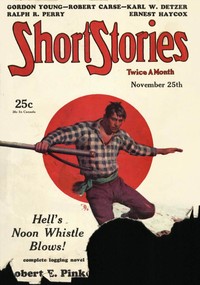
For Bully McGrane — Reading Notes, the stored edition analysis reports 10,087 words, 44 min estimated reading time, and 1 detected text section.
The text analysis averages about 15.1 words per sentence, while the detected sections provide another way to judge how the source is divided.
Project Gutenberg metadata also associates the work with “Short stories,” connecting these edition facts with the source record’s subject description.
Explore this collection
These alternatives are selected using recorded categories and estimated reading time.
About 42 minutes
Science Fiction Utopias
9,644 recorded words. 2 minutes difference from this book's estimate.
View Gutenberg source #67306About 35 minutes
Science Fiction Utopias
8,040 recorded words. 9 minutes difference from this book's estimate.
View Gutenberg source #78116About 33 minutes
Science Fiction Utopias
7,378 recorded words. 11 minutes difference from this book's estimate.
View Gutenberg source #77592Search stored excerpts and compare books → Choose by your preferences →
Choices use stored catalog measurements. Estimates vary with reading speed. A shared category is a catalog label, not a claim that two books have the same argument or literary quality.
Search reads excerpt text stored with this catalog and links to its associated Gutenberg record. The connection is stored in the site database; this tool does not recheck that every excerpt is word-for-word identical to that external record. Excerpt search does not cover every chapter and does not verify historical publication dates.
Catalog snapshot checked: 2026-09-26. Coverage: 94 public books, 94 available source excerpts.
Calculated from edition completeness, EPUB availability, text structure and catalogue metadata. Not a user rating.
Total of 100 points, scaled to a 2.5-5.0 range. Editions with an empty description or a missing EPUB file are not scored.
Public-domain source text
The source text is kept in the dedicated reader, separate from this catalogue record and its commentary.
Ernest Haycox’s “Bully McGrane” is cataloged under Science Fiction & Utopias, yet the excerpts contain no speculative elements. Instead, the story unfolds in Pistol Gap, a mining town where “death only infrequently visited a man in bed.” The narrative follows marshal Bully McGrane, a former prizefighter with a “cropped head badly scarred,” and miner Tud Drury, whose return to town with a loaded burro signals trouble. The catalog subjects—Western stories, miners, marshals—are accurate, but the science fiction classification appears to be a misattribution.
The excerpts establish Pistol Gap as a place where life is “pitched to a key of suddenness and intensity.” Men work with “energy that brought out the salt sweat” and play with equal violence, gambling away their wealth “in prodigal abandon.” The coroner’s jury routinely returns a verdict of “dead by an act of God,” suggesting that violent death is so common it is treated as natural. This setting is not a backdrop but an active force: McGrane’s “lowering, belligerent interest” in Drury’s movements and the marshal’s “overbearing authority” reflect a town where power is asserted through physical presence and threat. The language is blunt and muscular, matching the harsh environment.
Haycox invests heavily in physical detail to convey character and tension. McGrane is described as having a “vast paunch,” a “cropped head badly scarred from his prize-ring days,” and a “downsweeping mustache” that gives him a “considerable physical resemblance to John L. Sullivan—with whom he once had sparred.” Drury, in contrast, is “dark featured, straight-spined,” with a “suggestion of a will yet to be curbed.” These descriptions do more than paint a picture; they establish a power dynamic. McGrane’s bulk and scarred head signal a history of violence, while Drury’s bearing hints at a different class of Westerner—one who “seemed still to carry the air of belonging to the saddle by trade.” The marshal’s throaty challenge, “Come ’ere, Drury. Want to see you,” is delivered with “a bluntness that was at once uncivil and insolent,” setting the stage for a clash of wills.
The latter part of the excerpts shifts to Drury’s perspective as he evades his former partners. He moves through the back lots and Chinatown, a separate gulch “filled with sound of music and men.” Drury enlists a Chinaman named Sen Yat, recalling a past favor: “I did you a favor one time, and I need help now.” Sen Yat agrees to place two horses on the slope behind the dance hall, using his own animals to avoid detection. Drury pays him a hundred dollars and instructs, “Let nobody see you.” The transaction is terse and practical, reflecting a code of mutual obligation. Drury’s internal monologue reveals his desperation: “I’ve done my last dodgin’. I may die, and God help the girl if I do.” The mention of “the girl” (likely Anna, a performer) introduces a stake beyond survival, though the excerpts do not clarify her role. The scene ends with Drury entering the dance hall, aware that McGrane watches “cynically amused,” waiting for the inevitable shots.
Readers should note that the excerpts cover only the opening and a later sequence, leaving the full plot—including the fate of Drury, McGrane, and the unnamed girl—unresolved. The story’s classification as science fiction is unsupported by the available text; it is a straightforward Western with a focus on character conflict and atmospheric tension. Pay attention to how Haycox uses physical description and setting to drive the narrative, and consider whether the catalog subjects accurately reflect the work’s content.
That rainy afternoon, Bully McGrane left me with the grit of Pistol Gap still on my tongue—men digging their own graves, not for gold but for escape. The desperation felt geological, like the earth itself was closing in. Later, almost by accident, I found myself reading The Young Engineers in Arizona; or, Laying Tracks on the Man-killer Quicksand — A Reader’s Guide, and that same sinking, treacherous ground seemed to whisper its own quieter story.
A brief reflection can help important ideas stay with you longer.