About 35 minutes
The bar act — Themes and Context
Science Fiction Utopias
8,040 recorded words. 2 minutes difference from this book's estimate.
View Gutenberg source #78116
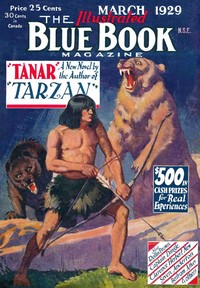
This digital edition of Buckin' the air — Context and Discussion is described by source-level measurements including 7,378 words, 33 min estimated reading time, and 1 detected text section.
The text analysis averages about 17.8 words per sentence, while the detected sections provide another way to judge how the source is divided.
Project Gutenberg metadata also associates the work with “Short stories,” connecting these edition facts with the source record’s subject description.
Explore this collection
These alternatives are selected using recorded categories and estimated reading time.
About 35 minutes
Science Fiction Utopias
8,040 recorded words. 2 minutes difference from this book's estimate.
View Gutenberg source #78116About 42 minutes
Science Fiction Utopias
9,644 recorded words. 9 minutes difference from this book's estimate.
View Gutenberg source #67306About 44 minutes
Science Fiction Utopias
10,087 recorded words. 11 minutes difference from this book's estimate.
View Gutenberg source #77816Search stored excerpts and compare books → Choose by your preferences →
Choices use stored catalog measurements. Estimates vary with reading speed. A shared category is a catalog label, not a claim that two books have the same argument or literary quality.
Search reads excerpt text stored with this catalog and links to its associated Gutenberg record. The connection is stored in the site database; this tool does not recheck that every excerpt is word-for-word identical to that external record. Excerpt search does not cover every chapter and does not verify historical publication dates.
Catalog snapshot checked: 2026-09-26. Coverage: 94 public books, 94 available source excerpts.
Calculated from edition completeness, EPUB availability, text structure and catalogue metadata. Not a user rating.
Total of 100 points, scaled to a 2.5-5.0 range. Editions with an empty description or a missing EPUB file are not scored.
Public-domain source text
The source text is kept in the dedicated reader, separate from this catalogue record and its commentary.
The story opens with cowboy narrator and his partner Bearcat Gibson flush from rodeo winnings, their pockets full and the trail ahead glittering. A letter from old pal Clay Hinkle, written in a deliberately misspelled dialect, offers them a shady deal to split prize money at the San Dominick rodeo. The narrator's voice is colloquial and self-assured, but the tone shifts when a marshal with a 'diving Adam’s apple and a large flowing pinto mustache' confronts them. The tension between the cowboys' freewheeling confidence and the law's interference sets the stage for a disastrous turn into the air.
The narrative is delivered in a first-person cowboy dialect, with contractions and nonstandard grammar like 'we was' and 'it wasn’t to be sneezed at.' The letter from Clay Hinkle is a standout: 'Dere boys: Well, you ok horsethieves, I thot I wood rite you a few lines to let you no thet I had bin elekted head judge of the San Dominick Rodeo.' This phonetic spelling and folksy tone contrast with the narrator’s own voice, which is more polished but still colloquial. The dialect creates a sense of authenticity and humor, grounding the absurd events in a specific cultural milieu.
The cowboys treat the airplane as if it were a bucking bronco, applying rodeo terminology to their flight. The narrator describes the plane as a 'go-devil of an outfit' that 'couldn’t get the best of a bank composed mostly of large rocks.' The crash sequence is a catalog of rural destruction: a greenhouse, a cemetery, an apple orchard, a watermelon patch, a herd of geese, a red barn, a henhouse. The narrator’s tone is gleeful, calling it 'the thrill of a lifetime' and noting 'the playful manner in which we had destroyed orchards, cornfields and barnyard fowls.' This blend of violence and humor is central to the story’s effect.
After the crash, the narrator experiences a dream where Bearcat floats with wings and a wreath reading 'Rest in Peace,' while organ music plays 'Here comes the bride.' This surreal interlude contrasts sharply with the harsh awakening: a hospital bed, angry voices, and the recognition of 'Old Walrus and Battling Mary'—the marshal and a woman whose property was destroyed. The narrator’s winnings, meant for rodeo glory, will now go to 'ruint lingerie.' The story ends on a note of ironic deflation, as the cowboy’s bravado meets financial and legal reality.
Readers should note the story’s reliance on a single, extended set piece: the airplane ride and its aftermath. The excerpts do not reveal the full resolution of the legal or financial troubles, nor do they show the San Dominick rodeo. The humor depends on the narrator’s unflappable tone in the face of chaos, and the dialect rewards careful reading for its invented spellings and rhythms. This is a short, fast-paced tale that blends Western and aviation genres with a light touch.
There’s something about Buckin’ the air that lingers—that moment when the ground stops being a promise. It reminds me of the quiet dread in The Young Engineers in Arizona; or, Laying Tracks on the Man-killer Quicksand — A Reader’s Guide, where every step feels borrowed. Both know how suddenly a solid thing can turn to nothing.
Create a short personal record of your experience with this book.