About 44 minutes
Bully McGrane — Reading Notes
Science Fiction Utopias
10,087 recorded words. 15 minutes difference from this book's estimate.
View Gutenberg source #77816
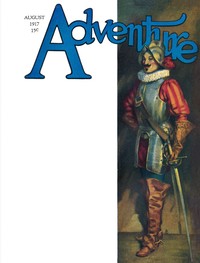
Bearly Reasonable — Reading Companion can be approached with a clearer sense of reading commitment from its source measurements: 13,397 words, 59 min estimated reading time, and 2 detected text sections.
The text analysis averages about 15.3 words per sentence, while the detected sections provide another way to judge how the source is divided.
Project Gutenberg metadata also associates the work with “Western stories,” connecting these edition facts with the source record’s subject description.
Explore this collection
These alternatives are selected using recorded categories and estimated reading time.
About 44 minutes
Science Fiction Utopias
10,087 recorded words. 15 minutes difference from this book's estimate.
View Gutenberg source #77816About 42 minutes
Science Fiction Utopias
9,644 recorded words. 17 minutes difference from this book's estimate.
View Gutenberg source #67306About 35 minutes
Science Fiction Utopias
8,040 recorded words. 24 minutes difference from this book's estimate.
View Gutenberg source #78116Search stored excerpts and compare books → Choose by your preferences →
Choices use stored catalog measurements. Estimates vary with reading speed. A shared category is a catalog label, not a claim that two books have the same argument or literary quality.
Search reads excerpt text stored with this catalog and links to its associated Gutenberg record. The connection is stored in the site database; this tool does not recheck that every excerpt is word-for-word identical to that external record. Excerpt search does not cover every chapter and does not verify historical publication dates.
Catalog snapshot checked: 2026-09-26. Coverage: 94 public books, 94 available source excerpts.
Calculated from edition completeness, EPUB availability, text structure and catalogue metadata. Not a user rating.
Total of 100 points, scaled to a 2.5-5.0 range. Editions with an empty description or a missing EPUB file are not scored.
Public-domain source text
The source text is kept in the dedicated reader, separate from this catalogue record and its commentary.
From the opening line, W. C. Tuttle establishes a distinct narrative voice through Magpie Simpkins, whose dialect and exaggerated descriptions set the tone for the story. When Magpie points down the trail and declares, “th’ feller what said, ‘Th’ worst is yet to come,’ must ’a’ meant that outfit comin’ our way,” the reader is immediately immersed in a world where humor arises from both situation and language. The parade of characters—a lean professor in a swallow-tailed coat, a female person “built fer neither speed nor comfort,” and a fat man whose clothes “ache”—is rendered with comic precision. Tuttle’s prose relies on simile and hyperbole, as when the professor’s legs are described as “bent back at th’ knees to keep its feet off th’ ground.” This opening establishes a fast-paced, dialogue-driven narrative that rarely pauses for reflection.
The most immediate feature of Bearly Reasonable is its heavy use of dialect, which functions as a marker of character and setting. Magpie and Ike speak in a phonetic Western vernacular that Tuttle maintains consistently: “yuh” for “you,” “th’” for “the,” and contractions like “ain’t” and “danged.” This choice gives the narration a colloquial rhythm and a sense of oral storytelling. The dialect is not merely decorative; it shapes the pacing, as sentences are often clipped and punctuated by interjections like “sez” and “snorts.” For instance, when Magpie says, “Gosh A’mighty, you gives me uh pain!” the exclamation carries both irritation and comic exaggeration. Readers should note that the dialect may require careful reading, but it rewards attention with vivid character voices.
Tuttle’s narrative moves through rapid exchanges that build humor through misunderstanding and deadpan retorts. The dialogue often serves to advance the plot while revealing character. When Ricky Henderson introduces the professor and his party, Magpie’s response—“Yuh will—in uh hearse”—shifts the tone from formal introduction to comic threat. The pacing accelerates during the planning of the bear experiment, with Magpie’s confident “this is uh cinch” countered by Ike’s cautious “lets be glad uh li’l later on.” This back-and-forth creates a rhythm of assertion and deflation. The excerpts show that Tuttle favors short, punchy lines over lengthy descriptions, keeping the story brisk. The physical comedy—such as the badger being carried upside down on a pole—is mirrored in the verbal sparring, making the dialogue a primary engine of humor.
Several details recur across the excerpts, hinting at Tuttle’s method of building humor through repetition. The bear Abe is persistently described as having a “bellyache,” a condition that Mighty treats with patent medicines, leading Magpie to complain that the remedies are causing Abe’s hair to fall out. This running joke about the bear’s health and appearance—he is “so shy on hair that nobody could prove whether he’s black, brown or gray”—ties into the central deception of passing a badger off as a bear cub. Tuttle also uses wordplay, as when Magpie says, “I’m strong on this here gladsome stuff,” twisting a common phrase. The setting, a mine cabin and a cave, is sketched with minimal detail, focusing instead on the characters’ interactions. These recurring elements create a cohesive comic world without requiring extensive exposition.
Readers approaching Bearly Reasonable should be prepared for a story that prioritizes verbal humor and character interplay over plot complexity. The dialect may initially slow reading, but it rewards patience with a distinctive voice. Pay attention to how Tuttle uses repetition—of phrases, ailments, and misunderstandings—to build comedic effect. The excerpts suggest a farcical tone that does not take its scientific premise seriously, so the enjoyment lies in the characters’ antics rather than any logical resolution. This is a short work best read in one sitting, allowing the rhythm of the dialogue to carry the reader through.
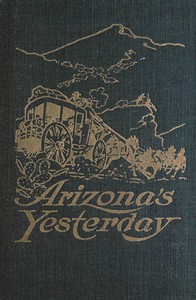
Reading about Magpie and Ike’s ridiculous bear scheme, I remembered sitting on my grandfather’s porch, him chuckling over a similar yarn. That same warm, unhurried feeling crept back with Arizona's yesterday — Reading Companion, where the past feels less like history and more like a familiar voice telling secrets. Both books just let me sink into their world, no rush.
Use these questions to collect your thoughts before moving on.