About 43 minutes
Augusta Tabor: Her Side of the Scandal — Key Ideas to Explore
Historical Psychological Social Fiction
9,769 recorded words. 6 minutes difference from this book's estimate.
View Gutenberg source #50934
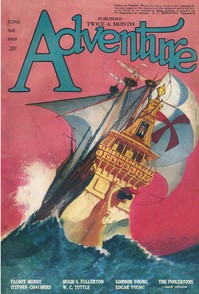
This digital edition of The Color of His Boots — A Reader’s Guide is described by source-level measurements including 11,055 words, 49 min estimated reading time, and 2 detected text sections.
The text analysis averages about 14.1 words per sentence, while the detected sections provide another way to judge how the source is divided.
Project Gutenberg metadata also associates the work with “Western stories,” connecting these edition facts with the source record’s subject description.
Explore this collection
These alternatives are selected using recorded categories and estimated reading time.
About 43 minutes
Historical Psychological Social Fiction
9,769 recorded words. 6 minutes difference from this book's estimate.
View Gutenberg source #50934About 43 minutes
Historical Psychological Social Fiction
9,725 recorded words. 6 minutes difference from this book's estimate.
View Gutenberg source #73091About 59 minutes
Historical Psychological Social Fiction
13,438 recorded words. 10 minutes difference from this book's estimate.
View Gutenberg source #67855Search stored excerpts and compare books → Choose by your preferences →
Choices use stored catalog measurements. Estimates vary with reading speed. A shared category is a catalog label, not a claim that two books have the same argument or literary quality.
Search reads excerpt text stored with this catalog and links to its associated Gutenberg record. The connection is stored in the site database; this tool does not recheck that every excerpt is word-for-word identical to that external record. Excerpt search does not cover every chapter and does not verify historical publication dates.
Catalog snapshot checked: 2026-09-26. Coverage: 94 public books, 94 available source excerpts.
Calculated from edition completeness, EPUB availability, text structure and catalogue metadata. Not a user rating.
Total of 100 points, scaled to a 2.5-5.0 range. Editions with an empty description or a missing EPUB file are not scored.
Public-domain source text
The source text is kept in the dedicated reader, separate from this catalogue record and its commentary.
W. C. Tuttle's The Color of His Boots opens with a first-person narrator, Ike Harper, who immediately establishes a colloquial, ironic voice. He complains that his partner Magpie Simpkins is “too finicky,” especially about a pair of yellow boots that cost twenty dollars. The boots, polished black by a porter, become a running joke: Magpie packs them reverently in a rainbow blanket, then shoots at the porter in a Pullman car. The story’s humor depends on Ike’s deadpan delivery and the escalating absurdity of their situation.
From the start, Tuttle signals a comic Western that prioritizes character voice over plot. Ike’s narration is full of asides (“They could set diamonds all the way around the sole, but just the same she don’t spell nothing but blisters and cramps”) and understated reactions to chaos. Readers should pay attention to how Ike’s perspective colors every event—his complaints about Magpie’s vanity and his own bow-legged discomfort set the tone for the misadventures to come.
Ike Harper tells the story in a rambling, first-person style that mixes complaint, exaggeration, and dry humor. He describes himself as bow-legged and uncomfortable in new boots, while Magpie is vain and impulsive. Ike’s voice is consistent: he uses phrases like “I still contend,” “Anyway,” and “Being part and parcel of Magpie’s crew, I immediate and soon ben.” This colloquial rhythm gives the narrative a spoken, anecdotal feel. Ike often undercuts Magpie’s grand gestures with practical observations, as when Magpie shoots at the porter and Ike notes, “Maybe the conductor was right, and maybe he wasn’t.” The reader must decide how much of Ike’s account is reliable—he admits to “a measure of precaution but not a prevarication,” suggesting he bends the truth. Pay attention to how Ike’s self-deprecating comments (e.g., “I sat down twice during the voyage”) shape the story’s comic tone.
The yellow boots are introduced as “a thing of beauty and a joy forever,” but they are quickly ruined by a porter’s black polish. Magpie’s attachment to them is treated with mock solemnity: “you don’t have to have a twenty-dollar bill around the house very long before you becomes sentimental about it.” The boots reappear throughout the excerpts, serving as a symbol of Magpie’s vanity and the pair’s bad luck. When they seek shelter, Ike jokes that angels don’t wear yellow boots, so they’d be safe. Later, the boots are mentioned in the context of the triplets’ concert and the muddy plowed fields. The motif is not heavy-handed; Tuttle uses it to punctuate scenes with a recurring visual joke. Readers can track how the boots’ condition mirrors the escalating chaos of the journey.
A key comic set piece involves a Russian-speaking farmer. When Magpie asks for milk, the farmer responds with gibberish like “Vizoffvufforskilloff?” and “Mffvuffzizzskoyiffsky?” Magpie pretends to understand, replying “Yes’m” and “Don’t mention it.” The farmer then produces two squalling infants, and Ike realizes they have acquired more babies. The humor comes from the complete breakdown of communication: neither side understands the other, but both act as if they do. Tuttle emphasizes this with Ike’s aside, “I didn’t know you could talk Russian, Magpie.” The scene relies on the reader’s awareness of the absurdity, which Ike’s narration heightens. This episode also introduces the triplets, who become a physical burden and a source of further mishaps.
Tuttle’s comedy is often physical and grounded in the Western landscape. Ike and Magpie stumble through plowed fields, fall through pole fences, and get stuck in mud. Ike describes “tearing the seat of his pants out of the mud, where he had sunk about a foot.” The rain is a constant presence, making their journey miserable. Range cows are introduced as “funny critters” with “strange and awful ideas on men on foot,” hinting at another comic obstacle. The setting is not romanticized; it is a source of discomfort and slapstick. Ike’s narration treats these hardships with weary humor, as when he says, “My arms are cramped, and my ear-drums are sore, but I’m game for anything from milk to murder.” The physical details—mud, rain, squalling babies—ground the story in a tangible, chaotic world.
The Color of His Boots rewards readers who enjoy a strong narrative voice and episodic comedy. Ike Harper’s perspective is the story’s engine; his deadpan complaints and understated reactions turn potential disasters into jokes. The excerpts suggest a loose, picaresque structure where the main pleasure is watching the characters react to each new absurdity. Pay attention to how Tuttle uses repetition (the boots, the babies) and escalating physical mishaps to build humor. The story does not aim for realism but for a tall-tale quality filtered through Ike’s distinctive, colloquial speech.
Holding those yellow boots, I thought of my grandfather’s worn work shoes, how he’d tell the same tall tale each Thanksgiving, voice dry as dust. Another book, The lovable liar — Inside the Classic, caught that same warmth—a person spinning nonsense to keep everyone close, even when the truth was simpler, quieter. Both felt like sitting on a porch at dusk.
Create a short personal record of your experience with this book.