About 43 minutes
The taking of Cloudy McGee — Edition Insights
Historical Psychological Social Fiction
9,725 recorded words. 0 minutes difference from this book's estimate.
View Gutenberg source #73091
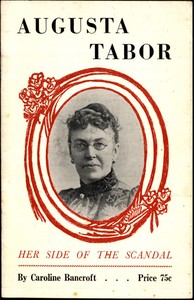
Before opening Augusta Tabor: Her Side of the Scandal — Key Ideas to Explore, the edition data offers a quick orientation: 9,769 words, 43 min estimated reading time, and 2 detected text sections.
The text analysis averages about 17.3 words per sentence, while the detected sections provide another way to judge how the source is divided.
Project Gutenberg metadata also associates the work with “Pioneers -- Colorado -- Pikes Peak Region -- Biography,” connecting these edition facts with the source record’s subject description.
Explore this collection
These alternatives are selected using recorded categories and estimated reading time.
About 43 minutes
Historical Psychological Social Fiction
9,725 recorded words. 0 minutes difference from this book's estimate.
View Gutenberg source #73091About 49 minutes
Historical Psychological Social Fiction
11,055 recorded words. 6 minutes difference from this book's estimate.
View Gutenberg source #65947About 59 minutes
Historical Psychological Social Fiction
13,438 recorded words. 16 minutes difference from this book's estimate.
View Gutenberg source #67855Search stored excerpts and compare books → Choose by your preferences →
Choices use stored catalog measurements. Estimates vary with reading speed. A shared category is a catalog label, not a claim that two books have the same argument or literary quality.
Search reads excerpt text stored with this catalog and links to its associated Gutenberg record. The connection is stored in the site database; this tool does not recheck that every excerpt is word-for-word identical to that external record. Excerpt search does not cover every chapter and does not verify historical publication dates.
Catalog snapshot checked: 2026-09-26. Coverage: 94 public books, 94 available source excerpts.
Calculated from edition completeness, EPUB availability, text structure and catalogue metadata. Not a user rating.
Total of 100 points, scaled to a 2.5-5.0 range. Editions with an empty description or a missing EPUB file are not scored.
Public-domain source text
The source text is kept in the dedicated reader, separate from this catalogue record and its commentary.
Caroline Bancroft's booklet opens with Augusta Tabor's own words from an 1883 Denver Republican interview: 'She is a blonde, I understand, and paints. But I have never seen her.' This remark about Baby Doe sets the tone for a narrative that relies heavily on Augusta's viewpoint, drawn from newspaper accounts and legal records. The catalog lists this work under 'Biography' and 'Pioneers,' but the excerpts reveal a focused account of the marital scandal rather than a full life story. Bancroft, a third-generation Coloradan and author of numerous local history booklets, frames Augusta as a determined figure who used her ownership stake in the Windsor Hotel to monitor her husband's activities.
The booklet's structure hinges on the October 1883 interview, which Bancroft uses as a springboard to recount events from 1880 to 1883. Augusta receives the reporter in her 'elegantly furnished sitting-room' at 97 Broadway, a mansion obtained through her divorce settlement. The interview headline—'Mrs. Tabor No. 1 makes some spicy revelations'—indicates the public appetite for scandal. Bancroft weaves in details from court proceedings, such as Augusta's courtroom exclamation 'Not willingly, Oh God, not willingly!' when granting the divorce. This reliance on a single interview and legal testimony gives the narrative a narrow, episodic quality, focusing on key confrontations rather than a comprehensive biography.
Augusta's financial acumen emerges as a central theme. In December 1880, she bought a third interest in the Windsor Hotel, where her husband later installed Baby Doe. Bancroft notes that Augusta used her ownership to 'check up regularly on activities,' implying the two women may have passed in the lobby. She refused to sell her share despite pressure from Tabor and manager Bill Bush, who wanted controlling interest. Her lawsuit for $50,000 annual alimony in 1882 listed Tabor's holdings at $9,410,000, but the court threw it out. Eventually, in January 1883, she traded the divorce for property worth about $300,000. The excerpts show a pattern of strategic resistance—holding the hotel stake, delaying the divorce—that Bancroft presents as Augusta's primary form of agency.
A revealing detail is Augusta's letter to Horace after he built the Tabor Grand Opera House, apologizing for 'what I had said in the heat of passion' and asking to attend the opening night and accompany him to Washington as a senator's wife. Bancroft reports that this letter was found among Baby Doe's papers after her death, and that 'no one knows how, or if, it was answered.' The Tabor box remained empty on opening night. This episode underscores Augusta's shifting position—from public defiance to private conciliation—and the limits of her influence. The booklet does not reveal the letter's response, leaving the reader with an unresolved gesture. Bancroft's use of such archival fragments gives the work a documentary feel, though the excerpts do not clarify whether the author interprets this as a turning point or a mere curiosity.
Readers should approach this booklet as a focused account of a public scandal rather than a full biography. Bancroft's reliance on the 1883 interview and legal records means that Augusta's voice is filtered through journalistic and courtroom conventions. The narrative skips over her earlier life and later years, concentrating on the period 1880-1883. Those interested in the broader context of the Tabor story may wish to consult Bancroft's companion booklet on Baby Doe, but this work stands as a deliberate presentation of one side of the story, grounded in specific documentary evidence.
Reading about Augusta Tabor’s quiet, stubborn dignity reminded me of long afternoons with The Trail of the Goldseekers: A Record of Travel in Prose and Verse — Story, Setting & Ideas. Both feel like voices from a raw, unfinished West—one a woman holding her ground, the other a traveler moving through that same immense loneliness. The echo lingered, soft and true.
Use these questions to collect your thoughts before moving on.