About 90 minutes
The country of the Neutrals — Text and Context
Science Fiction Utopias
20,500 recorded words. 8 minutes difference from this book's estimate.
View Gutenberg source #22363
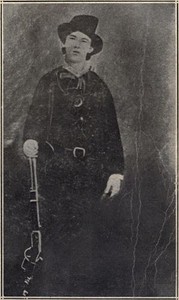
The source record for History of "Billy the Kid" — Inside the Classic measures this digital text at 22,535 words, 1 hr 38 min estimated reading time, and 3 detected text sections.
The text analysis averages about 18.5 words per sentence, while the detected sections provide another way to judge how the source is divided.
Project Gutenberg metadata also associates the work with “Billy, the Kid,” connecting these edition facts with the source record’s subject description.
Explore this collection
These alternatives are selected using recorded categories and estimated reading time.
About 90 minutes
Science Fiction Utopias
20,500 recorded words. 8 minutes difference from this book's estimate.
View Gutenberg source #22363About 125 minutes
Science Fiction Utopias
28,730 recorded words. 27 minutes difference from this book's estimate.
View Gutenberg source #3315About 59 minutes
Science Fiction Utopias
13,397 recorded words. 39 minutes difference from this book's estimate.
View Gutenberg source #66024Search stored excerpts and compare books → Choose by your preferences →
Choices use stored catalog measurements. Estimates vary with reading speed. A shared category is a catalog label, not a claim that two books have the same argument or literary quality.
Search reads excerpt text stored with this catalog and links to its associated Gutenberg record. The connection is stored in the site database; this tool does not recheck that every excerpt is word-for-word identical to that external record. Excerpt search does not cover every chapter and does not verify historical publication dates.
Catalog snapshot checked: 2026-09-26. Coverage: 94 public books, 94 available source excerpts.
Calculated from edition completeness, EPUB availability, text structure and catalogue metadata. Not a user rating.
Total of 100 points, scaled to a 2.5-5.0 range. Editions with an empty description or a missing EPUB file are not scored.
Public-domain source text
The source text is kept in the dedicated reader, separate from this catalogue record and its commentary.
Charles A. Siringo opens his 1920 history by asserting personal acquaintance with Billy the Kid and claiming to have assisted Sheriff Pat Garrett by furnishing three cowboys for the posse. The introduction lists informants—Garrett, John W. Poe, Ash Upson, and others—who played roles for or against the Kid, establishing a network of firsthand sources. Siringo also notes that Ash Upson lived in the Kid's mother's home for years, a detail that grounds the narrative in domestic intimacy rather than mere criminal reportage.
The book's subtitle sets a precise claim: the Kid killed twenty-one men (Indians excluded) and was under twenty-two when shot. This numerical framing recurs throughout the excerpts, as does the author's effort to distinguish his account from legend by offering specific, often mundane, details—such as the Kid swapping pistols with a cowboy named Finan or the gloves taken from his camp that may have caused a deputy's death.
Siringo positions himself not as a detached historian but as a participant in the events he describes. In the introduction, he states he was “personally acquainted” with Billy the Kid and “assisted in his capture” by providing three fighting cowboys to Sheriff Garrett. He names his sources—Pat Garrett, John W. Poe, Kip McKinnie, Charlie Wall, the Coe brothers, Tom O’Phalliard, Henry Brown, John Middleton, Martin Chavez, and Ash Upson—and specifies that some were for the Kid, some against. This explicit cataloging of informants suggests an effort to preempt accusations of bias or invention.
The author also claims to have gathered facts “from the lips of ‘Billy the Kid,’ himself,” though no direct quotation from the Kid appears in the excerpts. Instead, the narrative relies on the testimony of those who knew him, including Mrs. Charlie Bowdre, who hid the Kid after his escape. Siringo’s method—assembling multiple, sometimes opposing, voices—creates a layered account that acknowledges the difficulty of establishing a single truth about the outlaw’s life.
The text repeatedly emphasizes precise figures: the Kid killed twenty-one men, was twenty-one years old at his death, and had a six-year outlaw career. These numbers appear in the subtitle, the dedication page, and the opening of Chapter I, becoming a refrain that structures the reader’s expectation. Yet the excerpts also reveal a tension between this neat arithmetic and the messier reality of the narrative. For instance, the Kid’s first two killings are described in Mexico, but the chapter heading promises “Kills His First Two Men” without specifying their identities.
Other details ground the story in material culture: the Kid swaps his pistol for Cowboy Finan’s, then examines Grant’s ivory-handled revolver, noting two empty chambers. Later, Deputy Jim Carlyle appropriates the Kid’s gloves from an abandoned camp, and the text speculates that these gloves “were the real cause of his death.” Such objects—a pistol, a pair of gloves—carry narrative weight, linking actions to consequences in a way that abstract numbers cannot.
The excerpts depict a landscape where geography and weather shape events. The Kid’s gang operates from the Bosque Grande ranch on the Pecos River, driving stolen cattle across a “waterless desert” to the Capitan mountains. The new mining camp of White Oaks, established after gold was struck on Baxter Mountain in 1879, becomes a site of confrontation: the Kid celebrates his birthday there “under cover, among friends,” and later exchanges shots with deputies. The weather is bitter cold, with snow on the ground, and the Kid flees on foot without overcoat or gloves after his horse is shot.
These details—the hundred-mile desert crossing, the frozen landscape, the makeshift mining town—are not mere backdrop. They create the conditions for the Kid’s mobility and vulnerability. The posse finds “a good supply of grub and plunder” in the outlaws’ camp, and the Kid trails them back into White Oaks, finding shelter at a livery stable. The setting is both a refuge and a trap, a pattern that recurs throughout the excerpts.
Siringo’s history invites readers to weigh the claims of a narrator who was both a contemporary and a participant. The book’s value lies less in its conclusions about the Kid’s character than in the accumulation of specific, sometimes contradictory, details—the number of killings, the names of informants, the objects that survive. Readers attentive to the gaps between the author’s assertions and the evidence he presents will find a richer, more ambiguous portrait than the subtitle promises.
I keep thinking about Siringo’s worn details—the empty chamber, the gloves—and how a life gets reduced to its edges. The silent places feel like the opposite: vast, unnamed, where stories dissolve instead of sharpen. The silent places — Edition Insights holds that quiet for me, the way some afternoons hold a half-remembered face.
Build a private reading journal entry for this title.