About 367 minutes
The Prairie Mother — Story, Setting & Ideas
Science Fiction Utopias
84,223 recorded words. 7 minutes difference from this book's estimate.
View Gutenberg source #26011
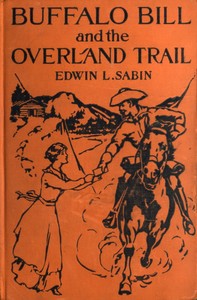
For Buffalo Bill and the Overland Trail Being the story of how boy and man worked hard and played hard to blaze the white trail, by wagon train, stage coach and pony — Themes and Context, the stored edition analysis reports 82,800 words, 6 hr estimated reading time, and 32 detected text sections.
The text analysis averages about 13.8 words per sentence, while the detected sections provide another way to judge how the source is divided.
Project Gutenberg metadata also associates the work with “Western stories,” connecting these edition facts with the source record’s subject description.
Explore this collection
These alternatives are selected using recorded categories and estimated reading time.
About 367 minutes
Science Fiction Utopias
84,223 recorded words. 7 minutes difference from this book's estimate.
View Gutenberg source #26011About 352 minutes
Science Fiction Utopias
80,770 recorded words. 8 minutes difference from this book's estimate.
View Gutenberg source #1897About 347 minutes
Science Fiction Utopias
79,660 recorded words. 13 minutes difference from this book's estimate.
View Gutenberg source #4702Search stored excerpts and compare books → Choose by your preferences →
Choices use stored catalog measurements. Estimates vary with reading speed. A shared category is a catalog label, not a claim that two books have the same argument or literary quality.
Search reads excerpt text stored with this catalog and links to its associated Gutenberg record. The connection is stored in the site database; this tool does not recheck that every excerpt is word-for-word identical to that external record. Excerpt search does not cover every chapter and does not verify historical publication dates.
Catalog snapshot checked: 2026-09-26. Coverage: 94 public books, 94 available source excerpts.
Calculated from edition completeness, EPUB availability, text structure and catalogue metadata. Not a user rating.
Total of 100 points, scaled to a 2.5-5.0 range. Editions with an empty description or a missing EPUB file are not scored.
Public-domain source text
The source text is kept in the dedicated reader, separate from this catalogue record and its commentary.
Edwin L. Sabin’s Buffalo Bill and the Overland Trail opens with a subtitle that announces its purpose: to tell “how boy and man worked hard and played hard to blaze the white trail.” The phrasing is deliberate—white trail signals not just the path across the plains but the expansion of Anglo-American settlement. Sabin’s diction throughout the excerpts oscillates between the colloquial and the declarative, a choice that grounds the narrative in the voices of its characters while maintaining an authoritative historical tone. The dedication “to the old-time plains freighters” and the epigraph from Whittier further frame the work as a tribute to labor and nation-building.
Sabin gives his characters a vernacular that feels specific to the trail. Left-over grumbles, “I don’t call this Pike’s Peak. And where’s Denver City? I don’t see any city.” The complaint is plain, almost petulant, and it contrasts with the Reverend Mr. Baxter’s more elevated observation: “it’s a wonderful thing, Davy—all these people, from all over the United States, setting out overland, breaking new trails, and founding a town away out here.” The juxtaposition of Left-over’s skepticism and Baxter’s wonder creates a dialogue that is not merely expository but character-revealing. Sabin also uses exclamations like “Goodness! Look at the people pouring in by the northern trail, too!” to convey excitement without overwriting. The speech patterns are consistent: short, declarative sentences, occasional interjections, and a reliance on concrete nouns (wagon train, bull trains) rather than abstract description.
Sabin’s descriptive passages often adopt a sweeping, almost cinematic perspective. The “marvellous panorama of the Rockies remained ever in sight before. Nobody tired of gazing at it.” This collective gaze is a recurring device: the landscape is not merely a backdrop but an object of shared attention. When the emigrants first sight the Cherry Creek settlements, Sabin writes: “down the winding, white-topped procession swept a glad cry. Whips were flourished, sun-bonnets were waved, hats were swung; men and women cheered, children shouted, dogs barked.” The sentence builds through a series of active verbs and concrete details, creating a sense of communal release. The dust is described as “six inches deep with dust, ground to powder by the constant wheels and hoofs”—a tactile detail that grounds the panoramic view in physical discomfort. Sabin balances the grand with the granular, ensuring the landscape never becomes abstract.
Sabin often conveys historical information through characters’ remarks rather than authorial exposition. When Billy notes, “That’s the cut-off down from the Salt Lake Overland Trail up the Platte. The bull trains travel that trail,” the line serves both as characterization (Billy knows the routes) and as a geographical marker for the reader. Similarly, the Reverend Mr. Baxter’s comment about “all these people, from all over the United States, setting out overland, breaking new trails, and founding a town away out here, six hundred miles across the desert” functions as a miniature lecture on westward expansion, but it is delivered in character. Sabin also uses the emigrants’ own language—Pike’s Peak settlements, Cherry Creek diggin’s, pound a day—to embed period-specific terms without glossing them. The effect is that the historical setting feels lived-in rather than narrated.
Sabin employs repetition to create rhythm and emphasis. In the description of the approach to Denver, the word trail appears multiple times: “The trail down Cherry Creek was six inches deep with dust… to the north lifted other dust lines, where the rival travel likewise pressed forward.” The repetition of trail and dust reinforces the physical reality of the journey. Later, the phrase “the long, long trail” echoes the subtitle’s promise. Sabin also uses parallel structure in action sequences: “Whips were flourished, sun-bonnets were waved, hats were swung.” This triadic pattern gives the prose a folkloric quality, as if the events are being recounted around a campfire. The rhythm is steady, rarely accelerating into breathlessness, which suits the three-miles-per-hour pace of the wagon trains Sabin celebrates in his dedication.
Readers will find that Sabin’s authorial choices—his ear for colloquial speech, his eye for panoramic yet precise description, and his habit of embedding history in dialogue—create a narrative that feels both documentary and dramatic. The excerpts suggest a work that values the collective experience of the trail over individual heroics, despite its titular focus on Buffalo Bill. Pay attention to how Sabin shifts between the voices of emigrants and the voice of the narrator; these shifts are where the book’s texture lies.
I keep thinking about how Sabin lets the prairie breathe—those long horizons between the gunfire. There’s a quiet ache in that, the way landscape outlasts the people crossing it. I felt something similar reading With Sully into the Sioux Land — Background and Themes, where the land itself seems to hold every hoofprint and shadow. It lingers, not as action, but as weather in you.
Capture what you thought, learned, and would like to remember.