About 347 minutes
The Flaming Forest — Story, Setting & Ideas
Science Fiction Utopias
79,660 recorded words. 10 minutes difference from this book's estimate.
View Gutenberg source #4702
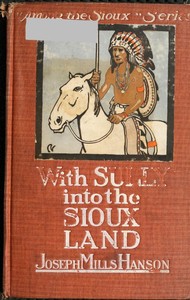
Before opening With Sully into the Sioux Land — Background and Themes, the edition data offers a quick orientation: 77,507 words, 5 hr 37 min estimated reading time, and 8 detected text sections.
The text analysis averages about 20.8 words per sentence, while the detected sections provide another way to judge how the source is divided.
Project Gutenberg metadata also associates the work with “Dakota Indians -- Fiction,” connecting these edition facts with the source record’s subject description.
Explore this collection
These alternatives are selected using recorded categories and estimated reading time.
About 347 minutes
Science Fiction Utopias
79,660 recorded words. 10 minutes difference from this book's estimate.
View Gutenberg source #4702About 352 minutes
Science Fiction Utopias
80,770 recorded words. 15 minutes difference from this book's estimate.
View Gutenberg source #1897About 319 minutes
Science Fiction Utopias
73,215 recorded words. 18 minutes difference from this book's estimate.
View Gutenberg source #4922Search stored excerpts and compare books → Choose by your preferences →
Choices use stored catalog measurements. Estimates vary with reading speed. A shared category is a catalog label, not a claim that two books have the same argument or literary quality.
Search reads excerpt text stored with this catalog and links to its associated Gutenberg record. The connection is stored in the site database; this tool does not recheck that every excerpt is word-for-word identical to that external record. Excerpt search does not cover every chapter and does not verify historical publication dates.
Catalog snapshot checked: 2026-09-26. Coverage: 94 public books, 94 available source excerpts.
Calculated from edition completeness, EPUB availability, text structure and catalogue metadata. Not a user rating.
Total of 100 points, scaled to a 2.5-5.0 range. Editions with an empty description or a missing EPUB file are not scored.
Public-domain source text
The source text is kept in the dedicated reader, separate from this catalogue record and its commentary.
The opening chapter of With Sully into the Sioux Land does not begin with General Sully or a battlefield, but with a boy named Tommy Briscoe spilling milk in his excitement to announce his father's return. The scene is domestic, set on a frontier homestead where the mother's face shows “the lines which the patient endurance of hardships draw.” The catalog lists the Battle of Killdeer Mountain and General Sully as subjects, yet the excerpts spend considerable time on the Briscoe family's flight, a swim interrupted by a musket shot, and the careful description of a butte's sandstone layers. This note explores how the novel balances historical military action with the everyday texture of frontier life, and what the excerpts reveal about that balance.
The excerpts open with a small, vivid crisis: Tommy's calf upsets a pail of milk. The mother's face is described as bearing “the lines which the patient endurance of hardships draw upon the faces of most frontier women.” This is not a generic description; it ties the family's emotional state to the physical landscape of the frontier. The father's approach is signaled by the horse's “short, jerking gallop,” a detail that suggests familiarity and urgency. The catalog subject “Frontier and pioneer life” is thus rendered not as a backdrop but as a source of tension. The Briscoes are not merely witnesses to history; their domestic sphere is repeatedly breached—by a rider, by the threat of attack, and later by the chaos of flight. The novel uses the family's vulnerability to make the historical campaign personally felt.
A later excerpt shifts to a military camp near the Cannonball River. The prose lingers on the “curious rock formations” and the “thin horizontal layers of sandstone” of a butte. The soldiers swim, collect rounded pebbles that gave the river its name, and eat choke-cherries. This is not a battle scene but a pause. The catalog subject “Dakota Indians -- Fiction” is present only as a threat: a musket shot from the bushes, a warrior on a pony. The attack is sudden and brief, and the response is naked men grabbing revolvers. The passage emphasizes the vulnerability of the soldiers even in a moment of leisure, and the landscape is both beautiful and dangerous. The novel uses setting to create a sense of constant alertness, where a swim can become a skirmish.
Despite being named in the title and catalog, General Sully appears only indirectly in the excerpts. He is mentioned as having “none too many scouts” and as granting permission for a swim. His presence is administrative, not heroic. The novel's focus is on the young men—Lieutenant Dale, Al, and Wallace—who carry out reconnaissance and face immediate danger. The catalog subject “Sully, Alfred, 1821-1879 -- Fiction” suggests a biographical or leadership-centered narrative, but the excerpts show Sully as a distant authority figure. The Battle of Killdeer Mountain is listed in the table of contents but does not appear in the provided text. This gap between catalog promise and excerpted reality suggests the novel may use Sully as a historical anchor while centering the experiences of junior officers and civilians.
Readers approaching With Sully into the Sioux Land should expect a narrative that moves between homestead drama and military expedition, with the Briscoe family providing continuity. The excerpts suggest the novel is less a strict war chronicle than a frontier adventure that uses historical figures and events as scaffolding. Pay attention to the landscape descriptions—they are not mere scenery but active elements in the story's tension. The book's structure, with chapters titled “The Revenge of the Coyotes” and “In the Wake of the Grasshoppers,” hints at a blend of natural history and pulp action that the catalog subjects only partially capture.
We spend decades shelving, and sometimes two books whisper across the aisle. With Sully into the Sioux Land holds that long frontier dusk, families listening for hooves. It always brings me back to Lillian Morris, and Other Stories — Story, Setting & Ideas, where the prairie holds its breath differently, less for war, more for a lone woman’s quiet choosing. A shared loneliness, I suppose. Nothing more.
Use these questions to collect your thoughts before moving on.