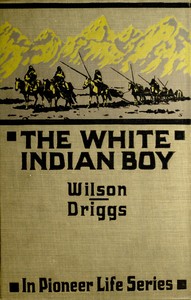
Elijah Nicholas Wilson, known as “Uncle Nick,” wrote a memoir that the catalog classifies under Fantasy & Juvenile Worlds, yet the excerpts read as a straightforward pioneer narrative. The editor, Howard R. Driggs, frames it as a contribution to history, part of a Pioneer Life Series aimed at showing “the courage, perseverance, and hardihood” of settlers. But the text itself resists that heroic gloss: Wilson’s voice is wry, practical, and often impatient with authority. In one passage, he flees a bishop who “talked me to death,” and later he snaps at a boy who calls him “Mr. Injun.” The catalog subjects—Frontier and pioneer life, Shoshoni Indians, Wyoming biography—are accurate, but the excerpts reveal a memoir more concerned with daily survival and social friction than with adventure or conquest.
A Voice That Resists Edification
The editorial preface hopes the book will “implant in them a desire to prove themselves worthy successors,” but Wilson’s own prose undercuts that moralizing. He describes being cornered by Bishop West, who “asked me a good many questions, but he said he would not weary me by talking too long.” Wilson’s response is to slip away at dawn. Later, when another bishop takes his horse’s rope, Wilson asks bluntly, “if he was a bishop. He said he was. I told him I thought so.” The humor is dry and defensive. Wilson does not present himself as a builder of the nation; he presents himself as a boy trying to avoid being talked to death. This tension between the editor’s frame and the narrator’s voice is the book’s most interesting feature.
Geography as a Character
The excerpts are dense with place names: Wilson, Wyoming; Fish Creek; the Teton Mountains; Ogden; Farmington; Salt Lake City; the Jordan River. These are not backdrops but active elements in the narrative. Wilson measures his progress by miles traveled and campsites found. He stops at “some hot springs,” unpacks his horses, and moves on. The landscape is both refuge and obstacle: he camps in a field after getting permission, and he avoids towns where bishops might detain him. The catalog lists Wyoming and Shoshoni Indians as subjects, but the excerpts show a protagonist navigating a Mormon settlement geography—bishops, governors, and farms—as much as a wilderness. The memoir’s structure follows a trail of specific locations, each with its own social encounter.
The Unreliable Category: Fantasy & Juvenile Worlds
Cataloging this memoir as Fantasy & Juvenile Worlds seems a misdirection. The excerpts contain no fantasy elements: no magic, no mythical creatures, no invented realms. The closest thing to wonder is a “true fish story” about catching trout from a dooryard. The juvenile label fits the age of the protagonist and the publisher’s schoolbook format, but the content is not childish. Wilson trades insults with a boy who calls him “Mr. Injun,” and he is wary of adults who want to question him. The editor’s note says the book will have “all the interest of a tale of adventure,” but the excerpts read more like a picaresque survival guide. Readers expecting a fantasy will find a gritty, specific memoir of a white boy living among Shoshones and later traveling alone through Utah.
To read The White Indian Boy is to watch a narrator resist the roles others try to assign him: the edified pioneer, the grateful convert, the exotic Indian boy. Wilson’s voice is laconic, his observations concrete. The book rewards attention to its small rebellions and its precise geography. Approach it not as a juvenile adventure but as a primary document of a young man’s negotiation with two cultures—Shoshone and Mormon—neither of which he fully joins.
Some books sit quietly beside each other, like old friends sharing a bench. The plainspoken boy in The White Indian Boy never trusted a talkative bishop, preferring deeds to words. That same spare honesty lives in Ronicky Doone — Key Ideas to Explore, a lone rider who needs no sermon to know his own code. Both prefer open country and short sentences.