About 472 minutes
Heart of the Sunset — Story, Setting & Ideas
Historical Psychological Social Fiction
108,507 recorded words. 336 minutes difference from this book's estimate.
View Gutenberg source #5099
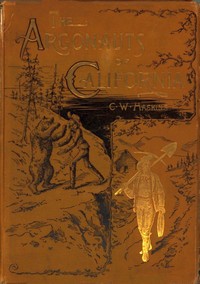
The Argonauts of California: being the reminiscenses of scenes and incidents that occurred in California in the early mining days — Text and Context can be approached with a clearer sense of reading commitment from its source measurements: 185,736 words, 13 hr 28 min estimated reading time, and 20 detected text sections.
The text analysis averages about 39.5 words per sentence, while the detected sections provide another way to judge how the source is divided.
Project Gutenberg metadata also associates the work with “Frontier and pioneer life -- California,” connecting these edition facts with the source record’s subject description.
Explore this collection
These alternatives are selected using recorded categories and estimated reading time.
About 472 minutes
Historical Psychological Social Fiction
108,507 recorded words. 336 minutes difference from this book's estimate.
View Gutenberg source #5099About 368 minutes
Historical Psychological Social Fiction
84,479 recorded words. 440 minutes difference from this book's estimate.
View Gutenberg source #22350About 364 minutes
Historical Psychological Social Fiction
83,579 recorded words. 444 minutes difference from this book's estimate.
View Gutenberg source #36599Search stored excerpts and compare books → Choose by your preferences →
Choices use stored catalog measurements. Estimates vary with reading speed. A shared category is a catalog label, not a claim that two books have the same argument or literary quality.
Search reads excerpt text stored with this catalog and links to its associated Gutenberg record. The connection is stored in the site database; this tool does not recheck that every excerpt is word-for-word identical to that external record. Excerpt search does not cover every chapter and does not verify historical publication dates.
Catalog snapshot checked: 2026-09-26. Coverage: 94 public books, 94 available source excerpts.
Calculated from edition completeness, EPUB availability, text structure and catalogue metadata. Not a user rating.
Total of 100 points, scaled to a 2.5-5.0 range. Editions with an empty description or a missing EPUB file are not scored.
Public-domain source text
The source text is kept in the dedicated reader, separate from this catalogue record and its commentary.
Haskins opens his 1890 memoir with a striking claim: he wrote it while snowed in at a silver mining camp in northern Idaho during the winter of 1887–88, relying entirely on memory. The preface frames the book as both personal amusement and a historical record, prefixed by a list of roughly 35,000 pioneer names. This dual purpose—reminiscence and documentation—shapes the reading experience from the start.
The narrative voice emerges not as a continuous autobiography but as a series of campfire-style exchanges. In the excerpt, a character named Yank recounts a gold dust theft aboard the steamship Illinois in 1851, complete with dialogue, a detective chase to the Philadelphia Mint, and a wry coda about the thief later boasting of his time as Alcalde in Hangtown. The frame is conversational, with listeners prompting details.
Haskins explicitly grounds his account in recollection, not notes or diaries. The preface states the events are “written entirely from memory,” and he asks surviving Argonauts to “bear me witness.” This reliance on memory gives the text a particular texture: dates and locations are offered as approximate (“nearly forty years ago”), and the narrative often circles back to verify details through group consensus. In the excerpt, when Yank finishes a story, someone asks if he “ran across many of the old-timers,” reinforcing the communal, oral quality. Readers should expect a memoir that prioritizes vivid incident over strict chronology, and that occasionally acknowledges gaps or uncertainties.
The book’s structure is not a single linear tale but a collection of anecdotes delivered within a framing device. The excerpt presents a scene of old miners gathered, with one man, Jeff, telling a tall tale about a “plum-duff” that turns into a European statue, and another, Yank, narrating a theft. The listeners interject with questions (“Some one asked Jeff if he had ever heard anything about the Professor”), and the stories are punctuated by the group’s reactions. This frame suggests the book may be organized as a series of such sessions, with different narrators taking turns. The reader becomes part of the audience, invited to savor the digressions and asides that characterize oral storytelling.
Haskins captures the speech patterns of his characters through dialect and colloquial phrasing. Jeff’s story includes a German-accented line: “I takes dis vonderful stone to Sharmany mit me.” Yank’s narrative uses period slang like “bar-room scrub-gambler” and “buckskin belt.” The dialogue is peppered with direct address (“boys,” “my old pard”) and casual interjections (“Well,” “Perhaps some of you remember this man”). These linguistic choices root the text in the specific social world of the mining camps. Readers attuned to vernacular will find the voices distinct, though the author’s own narration remains more formal, creating a contrast between the frame and the embedded tales.
The excerpt’s central anecdote—a gold dust theft on a steamer—illustrates a recurring theme of lost or stolen fortune. The victim nearly recovers his gold but misses it by “about ten minutes” at the Mint. The thief, never named, later prospers and boasts of his time as Alcalde in Hangtown, a town named for a lynching. This ironic outcome—the criminal rewarded, the victim empty-handed—reflects a unsentimental view of frontier justice. Haskins does not moralize; he lets the story’s details speak. The inclusion of such episodes, told with dry humor, suggests the book offers a pragmatic, sometimes wry perspective on the gold rush, rather than a heroic or romanticized one.
Because the excerpts represent only a small portion of a 185,000-word text, readers should approach the book as a mosaic of episodes rather than a unified narrative. The frame story and the list of pioneers hint at a work that balances individual recollection with collective history. Pay attention to who is speaking in each section, and note how Haskins shifts between his own voice and the voices of his informants. The book rewards those who enjoy meandering, character-driven accounts of the past.
I keep thinking about Haskins' old-timers, leaning back and trading tales until the fire burned low—that quiet ache of wanting to hold onto a moment that’s already slipping. The mark of Zorro — A Reader’s Guide gave me that same feeling, like watching a mask drop and a story settle into something true. It lingered, softly, the way a good yarn should.
A brief reflection can help important ideas stay with you longer.