About 34 minutes
Sam Bass — A Closer Reading
Fantasy Juvenile Worlds
7,791 recorded words. 7 minutes difference from this book's estimate.
View Gutenberg source #70645
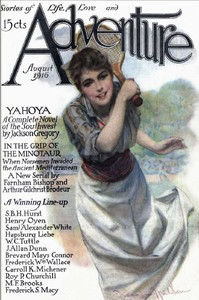
The source record for Psychology and Copper — Key Ideas to Explore measures this digital text at 6,200 words, 27 min estimated reading time, and 1 detected text section.
The text analysis averages about 20.4 words per sentence, while the detected sections provide another way to judge how the source is divided.
Project Gutenberg metadata also associates the work with “Short stories,” connecting these edition facts with the source record’s subject description.
Explore this collection
These alternatives are selected using recorded categories and estimated reading time.
About 34 minutes
Fantasy Juvenile Worlds
7,791 recorded words. 7 minutes difference from this book's estimate.
View Gutenberg source #70645About 43 minutes
Fantasy Juvenile Worlds
9,806 recorded words. 16 minutes difference from this book's estimate.
View Gutenberg source #78339About 56 minutes
Fantasy Juvenile Worlds
12,811 recorded words. 29 minutes difference from this book's estimate.
View Gutenberg source #75062Search stored excerpts and compare books → Choose by your preferences →
Choices use stored catalog measurements. Estimates vary with reading speed. A shared category is a catalog label, not a claim that two books have the same argument or literary quality.
Search reads excerpt text stored with this catalog and links to its associated Gutenberg record. The connection is stored in the site database; this tool does not recheck that every excerpt is word-for-word identical to that external record. Excerpt search does not cover every chapter and does not verify historical publication dates.
Catalog snapshot checked: 2026-09-26. Coverage: 94 public books, 94 available source excerpts.
Calculated from edition completeness, EPUB availability, text structure and catalogue metadata. Not a user rating.
Total of 100 points, scaled to a 2.5-5.0 range. Editions with an empty description or a missing EPUB file are not scored.
Public-domain source text
The source text is kept in the dedicated reader, separate from this catalogue record and its commentary.
W. C. Tuttle's 1916 story "Psychology and Copper" opens with Ike Harper climbing out of a "gopher-hole" to declare that "fool luck has uncovered more bonanzas than science." This framing sets up a yarn about Magpie Simpkins, a "scientific prospector" whose book knowledge never yields a strike. The tale is told entirely in Ike's vernacular, with phonetic spellings like "yuh" and "uh" that mark the dialogue as distinctly Western. The catalog subjects list "Short stories; Western stories; Miners -- Fiction; Simpkins, Magpie (Fictitious character) -- Fiction; Harper, Ike (Fictitious character) -- Fiction; Piperock (Montana : Imaginary place) -- Fiction," and the excerpts confirm these elements: Piperock appears as the nearby town, and the two named characters drive the plot.
The story's central tension is between scientific method and blind luck. Ike opens by citing two lucky strikes: Jerry Sullivan's burro sliding into the Silver Cross, and Hen Berry accidentally shooting a six-shooter into the ground to uncover a gold vein. In contrast, Magpie Simpkins is a "scientific prospector" who can "tell yuh jist what it contained and why it contained said constituents" from a rock sample, yet "because of it he never made uh strike." The excerpts show Magpie's earlier failed experiments: he tried hypnotism on a wildcat, with poor results. This pattern of book learning failing in practice is echoed in the character of Peters, who has "six little books on mineralogy which he reads continually" but cannot identify ore without them. Tuttle uses these parallels to question the value of theoretical knowledge in the rough-and-tumble mining world.
The plot hinges on a copper bolt that Magpie grinds up and uses to salt Tellurium's mine. Ike recalls a bet about Tellurium's "driftin' average" that Magpie won, costing them the Daylight mine. Magpie later confesses: "Remember that old copper bolt that was in our shack, Ike? Well, I—I took that bolt and ground her up, and salted his danged mine!" This act of salting—fraudulently adding ore to a claim—is a classic Western mining trope. The story's title, "Psychology and Copper," thus refers to Magpie's psychological manipulation (using the bet and Peters's gullibility) combined with the physical copper dust. The excerpts do not reveal whether Tellurium's mine is actually rich or just salted, leaving the outcome ambiguous.
Tuttle's narrative voice is consistent throughout the excerpts. Ike Harper speaks in a folksy, uneducated dialect with dropped consonants and nonstandard grammar: "I knowed all th' time that we hadn't ought to let uh third party into our outfit." The setting is Plenty Stone Creek, near the fictional town of Piperock, Montana. Physical details are sparse but evocative: a "gopher-hole" mine, a boulder for sitting, a shack with a copper bolt. The only character described physically is Peters, with his "little brown derby hat" that wiggles when he talks, and a chin that "didn't have no chin to speak of—jist sort a slid away from his lower lip." These details ground the story in a specific time and place without relying on extensive description.
Readers should note that the excerpts cover only the beginning and end of the story; the middle section, including the full development of the bet and the salting scheme, is missing. The catalog subjects list this as a "Western stor[y]" and a "Short stor[y]," and the text confirms both. Tuttle's use of dialect and mining jargon rewards careful reading, and the ironic twist—Magpie proving his point by cheating—invites reflection on the ethics of "psychology" in a frontier setting.
Reading about Magpie Simpkins and his salted mine, I found myself thinking of another roaming soul, Ronicky Doone, and how both men trust their own peculiar instincts over what the books prescribe. There’s a quiet kinship in that stubbornness, a faith in the luck of one’s own hands. It made me smile. Ronicky Doone — Key Ideas to Explore brought that feeling back, like finding an old friend’s footprint on the same dusty trail.
Capture what you thought, learned, and would like to remember.









