About 103 minutes
On the Trail of Deserters; A Phenomenal Capture — Edition Insights
Adventure Picaresque Fiction
23,631 recorded words. 56 minutes difference from this book's estimate.
View Gutenberg source #33684
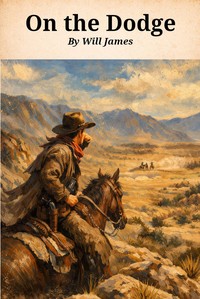
The catalog record for On the dodge — Reading Companion provides practical reading context through 10,743 words, 47 min estimated reading time, and 1 detected text section.
The text analysis averages about 27.1 words per sentence, while the detected sections provide another way to judge how the source is divided.
Project Gutenberg metadata also associates the work with “Short stories,” connecting these edition facts with the source record’s subject description.
Explore this collection
These alternatives are selected using recorded categories and estimated reading time.
About 103 minutes
Adventure Picaresque Fiction
23,631 recorded words. 56 minutes difference from this book's estimate.
View Gutenberg source #33684About 171 minutes
Adventure Picaresque Fiction
39,298 recorded words. 124 minutes difference from this book's estimate.
View Gutenberg source #22670About 174 minutes
Adventure Picaresque Fiction
39,938 recorded words. 127 minutes difference from this book's estimate.
View Gutenberg source #77480Search stored excerpts and compare books → Choose by your preferences →
Choices use stored catalog measurements. Estimates vary with reading speed. A shared category is a catalog label, not a claim that two books have the same argument or literary quality.
Search reads excerpt text stored with this catalog and links to its associated Gutenberg record. The connection is stored in the site database; this tool does not recheck that every excerpt is word-for-word identical to that external record. Excerpt search does not cover every chapter and does not verify historical publication dates.
Catalog snapshot checked: 2026-09-26. Coverage: 94 public books, 94 available source excerpts.
Calculated from edition completeness, EPUB availability, text structure and catalogue metadata. Not a user rating.
Total of 100 points, scaled to a 2.5-5.0 range. Editions with an empty description or a missing EPUB file are not scored.
Public-domain source text
The source text is kept in the dedicated reader, separate from this catalogue record and its commentary.
The narrator of Will James's 'On the dodge' announces himself in the first sentence with a grammatical choice that sets the tone: 'I goes to reaching for the dropped belt and six-guns.' This deliberate nonstandard usage, consistent throughout the excerpt, establishes a vernacular voice that is both unpolished and precise. The story opens with a stolen horse—the narrator's big buckskin, identified by its rounded shoe print—and quickly escalates into a chase. The prose moves at a gallop, matching the narrator's urgency, but pauses for sharp details: the spike-heel boot-mark, the brown saddle-horse 'sat on fast and steady,' the way a pony 'hits the other side of the washouts.' These observations ground the action in a specific, tactile world.
The narrator's language is the story's most distinctive feature. He uses 'I goes,' 'I finds,' 'I figgered,' and 'I sure knowed'—forms that signal an uneducated but not unintelligent speaker. This is not mere dialect for color; it shapes how the reader perceives the narrator's reliability and his relationship to the law. When the sheriff asks where he comes from, the narrator answers plainly: 'I'm from the cow-camp on Arrow Springs.' The simplicity of the reply contrasts with the complexity of the situation—he is mistaken for a horse thief. The vernacular also creates intimacy, as if the narrator is telling the story aloud to a listener. James avoids phonetic spelling for every word, instead selecting key verbs and contractions to suggest speech patterns without overwhelming the page.
The narrative accelerates and decelerates in response to the chase. Early paragraphs are long, packed with action: the narrator snares a horse, 'opens the gate and straddles him on the jump,' and rides 'like I was trying to head a bunch of mustangs.' Sentences are linked by commas and 'and,' creating a breathless rhythm. Later, when the narrator hides under a granite boulder, the pace slows. He 'hangs my saddle up a piñon tree,' pads his feet with gunnysack, and climbs to a high point. The shift from motion to stillness is marked by shorter paragraphs and a focus on sensory details: the cold wind, the rocky ledge, the fire below. This alternation between speed and caution mirrors the narrator's strategy—he must think as well as ride.
James, a working cowboy and artist, fills the story with precise observations of horse behavior and terrain. The narrator recognizes his buckskin by 'his two white front feet and his bald face.' He notes how a tired pony 'hits the other side of the washouts' and how the sight of mustangs makes his horse 'take heart to keep up the speed.' These details are not decorative; they drive the plot. The narrator uses his knowledge of horses to escape—slipping off his saddle so the pony joins the mustangs, leaving a false trail. The landscape is equally specific: piñon trees, buckbrush, granite boulders, a high rocky ledge above a three-hundred-foot drop. Each location is named or described with functional clarity, never vague. The setting is not a backdrop but an active participant in the chase.
Readers should attend to how James balances the narrator's colloquial voice with moments of sharp visual description. The story's tension depends not only on the pursuit but on the narrator's ability to read horses and ground. Because the excerpts are incomplete, the resolution of the mistaken-identity plot and the fate of the buckskin remain unknown. What is clear is that James trusts his narrator's eye and ear, and the story rewards attention to both.
That Will James voice stays with me—the way a stolen horse becomes a whole tangled fate. It reminded me of something quieter in Bransford in Arcadia — Key Ideas to Explore, where being mistaken for someone else bends a life sideways too. I keep thinking how both stories ache with that hollowness of running toward a home you’re not sure exists.
Capture what you thought, learned, and would like to remember.
![Cover of Last of the Great Scouts: The Life Story of William F. Cody ["Buffalo Bill"] — Context and Discussion](https://inesb.com/storage/media/covers/pg1248.jpg)








