About 171 minutes
Jack Wright and His Electric Stage; or, Leagued Against the James Boys — A Closer Reading
Adventure Picaresque Fiction
39,298 recorded words. 3 minutes difference from this book's estimate.
View Gutenberg source #22670
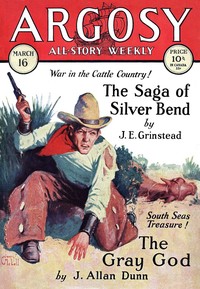
Before opening The saga of Silver Bend — A Reader’s Guide, the edition data offers a quick orientation: 39,938 words, 2 hr 54 min estimated reading time, and 11 detected text sections.
The text analysis averages about 12.8 words per sentence, while the detected sections provide another way to judge how the source is divided.
Project Gutenberg metadata also associates the work with “Western stories,” connecting these edition facts with the source record’s subject description.
Explore this collection
These alternatives are selected using recorded categories and estimated reading time.
About 171 minutes
Adventure Picaresque Fiction
39,298 recorded words. 3 minutes difference from this book's estimate.
View Gutenberg source #22670About 235 minutes
Adventure Picaresque Fiction
53,851 recorded words. 61 minutes difference from this book's estimate.
View Gutenberg source #78657About 103 minutes
Adventure Picaresque Fiction
23,631 recorded words. 71 minutes difference from this book's estimate.
View Gutenberg source #33684Search stored excerpts and compare books → Choose by your preferences →
Choices use stored catalog measurements. Estimates vary with reading speed. A shared category is a catalog label, not a claim that two books have the same argument or literary quality.
Search reads excerpt text stored with this catalog and links to its associated Gutenberg record. The connection is stored in the site database; this tool does not recheck that every excerpt is word-for-word identical to that external record. Excerpt search does not cover every chapter and does not verify historical publication dates.
Catalog snapshot checked: 2026-09-26. Coverage: 94 public books, 94 available source excerpts.
Calculated from edition completeness, EPUB availability, text structure and catalogue metadata. Not a user rating.
Total of 100 points, scaled to a 2.5-5.0 range. Editions with an empty description or a missing EPUB file are not scored.
Public-domain source text
The source text is kept in the dedicated reader, separate from this catalogue record and its commentary.
J. E. Grinstead's The Saga of Silver Bend, serialized in Argosy All-Story Weekly in 1929, opens not with a gunfight but with two cowboys—the round-faced, blue-eyed Dolly and the gaunt, thoughtful Old Sankey—hazing cattle toward a valley called Silver Bend. The catalog subjects list it as a Western adventure story about cowboys and ranches, yet the excerpts emphasize a mystery: the repeated question 'Who killed Asa Ross?' drives much of the narrative. Grinstead devotes considerable space to Zella Tarleton's inner turmoil as she wrestles with doubt about Randy Ross's guilt, suggesting the novel is as much a psychological drama as a range-war tale.
The opening pages establish a sharp contrast between Dolly and Old Sankey—not just in appearance but in temperament. Dolly, with his 'wide, innocent blue eyes of a baby' and auburn curls, sings a work song about Railroad Ranch ('Workin' on the Railroad, Mighty little pay'), while Sankey growls at him to stop. Their dialogue is laced with colloquialisms: 'this ain't no time for singing fool songs,' and 'if they jump Old Railroad Ross, they'll be smoke.' Grinstead uses these exchanges to build character without exposition. Later, Zella's internal monologue—'she knew in her heart, as she pressed the note to her bosom, that it was not and never could be'—shifts to a more introspective register, showing the author's range between rough cowboy speech and sentimental reflection.
The chapter titles—'Who Killed Asa Ross?' and 'Dolly Tells the Truth'—signal a whodunit structure within the Western framework. In the excerpts, Zella directly asks Bell Holderness, 'Who killed Asa Ross?' and he staggers, replying, 'Why, I—I can't tell you.' When she presses, he says, 'Sometimes it is best not to know too much about such things.' This evasion, combined with Zella's recollection that 'Bell never had said definitely who killed Asa Ross,' suggests the mystery is deliberately withheld from the reader. The excerpts do not reveal the answer, but they establish that the question torments Zella and drives her actions. The narrative thus intertwines a love triangle—Zella torn between Randy and Bell—with a murder investigation.
The valley of Silver Bend is described as 'a great loop, six miles deep' with 'silvery cottonwoods' marking the river. The Railroad Ranch, owned by 'Old Railroad Ross,' is the center of conflict: killers from across the river threaten to cut the herd during the home round-up. The excerpts show the landscape as both a physical space and a source of tension. Zella's home, with its roses and spring morning, contrasts with the danger lurking outside. The note Randy sends—addressed formally to 'Miss Tarleton' instead of the familiar salutation she expects—signals a rupture in their relationship. Grinstead uses the setting to mirror emotional states: Zella's weeping and sleeplessness occur against the backdrop of a 'fine, balmy spring morning,' heightening the irony.
Readers should pay attention to the chapter titles, which function as clues, and to the way Grinstead withholds key information—such as the identity of Asa Ross's killer—until late in the serial. The excerpts suggest that the novel rewards careful reading of dialogue and internal monologue, where characters reveal more than they intend. The work song Dolly sings early on may also carry thematic weight, hinting at the labor and danger that define life on the Railroad Ranch.
There’s something about that old Texas loneliness, the way a secret sits heavy between people. The Saga of Silver Bend left me thinking about Zella’s quiet dread long after I closed it. That same ache lives in Emerson's Wife and Other Western Stories — Story, Setting & Ideas, where the land itself feels like a witness. I still recall certain lines at odd moments.
Create a short personal record of your experience with this book.
![Cover of Last of the Great Scouts: The Life Story of William F. Cody ["Buffalo Bill"] — Context and Discussion](https://inesb.com/storage/media/covers/pg1248.jpg)








