About 413 minutes
"Boots and Saddles"; Or, Life in Dakota with General Custer — Themes and Context
Fantasy Juvenile Worlds
94,784 recorded words. 12 minutes difference from this book's estimate.
View Gutenberg source #48972
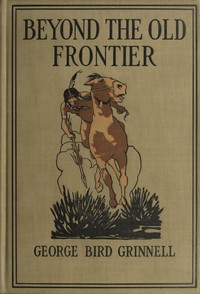
The catalog record for Beyond the Old Frontier: Adventures of Indian-Fighters, Hunters, and Fur-Traders — Reading Companion provides practical reading context through 97,574 words, 7 hr 5 min estimated reading time, and 20 detected text sections.
The text analysis averages about 24.3 words per sentence, while the detected sections provide another way to judge how the source is divided.
Project Gutenberg metadata also associates the work with “Frontier and pioneer life -- West (U.S.),” connecting these edition facts with the source record’s subject description.
Explore this collection
These alternatives are selected using recorded categories and estimated reading time.
About 413 minutes
Fantasy Juvenile Worlds
94,784 recorded words. 12 minutes difference from this book's estimate.
View Gutenberg source #48972About 466 minutes
Fantasy Juvenile Worlds
107,022 recorded words. 41 minutes difference from this book's estimate.
View Gutenberg source #20418About 349 minutes
Fantasy Juvenile Worlds
80,238 recorded words. 76 minutes difference from this book's estimate.
View Gutenberg source #18150Search stored excerpts and compare books → Choose by your preferences →
Choices use stored catalog measurements. Estimates vary with reading speed. A shared category is a catalog label, not a claim that two books have the same argument or literary quality.
Search reads excerpt text stored with this catalog and links to its associated Gutenberg record. The connection is stored in the site database; this tool does not recheck that every excerpt is word-for-word identical to that external record. Excerpt search does not cover every chapter and does not verify historical publication dates.
Catalog snapshot checked: 2026-09-26. Coverage: 94 public books, 94 available source excerpts.
Calculated from edition completeness, EPUB availability, text structure and catalogue metadata. Not a user rating.
Total of 100 points, scaled to a 2.5-5.0 range. Editions with an empty description or a missing EPUB file are not scored.
Public-domain source text
The source text is kept in the dedicated reader, separate from this catalogue record and its commentary.
George Bird Grinnell’s Beyond the Old Frontier assembles narratives of trappers, hunters, and soldiers who ventured west of the Mississippi before widespread settlement. Rather than writing a continuous history, Grinnell curates excerpts from figures such as George Frederick Ruxton, Lewis Hector Garrard, and Alexander Ross, letting their own voices—often blunt, observant, and shaped by physical hardship—carry the story. The book’s prefatory note sets a tone of vanished remoteness: the Far West was then “as far away as Central China is to-day.” Grinnell’s editorial hand is light, but his choices in selecting and framing these accounts reveal a preoccupation with authenticity and the texture of daily danger.
Grinnell devotes considerable space to George Frederick Ruxton, a young English ex-officer who traveled through Mexico and the Rocky Mountains around 1846. The excerpts show Ruxton’s prose mixing dry humor with precise, almost ethnographic detail. He notes that Vera Cruz, “from the plague of yellow fever,” was called “the City of the Dead.” His description of Mexican troops is particularly telling: “The crack regiment of the Mexican army—el onze, the 11th—which happened to be in garrison at the time, cut most prodigious capers in the great plaza several times a day, disciplinando—drilling for the occasion.” The juxtaposition of formal drill and the word “capers” undercuts military dignity. Ruxton also observes General Santa Anna’s return, noting he was “received with some form and ceremony, but with no applause,” and that a representative “cross-examined” him “in very positive fashion.” These details convey a society in flux, where authority is fragile and spectacle masks disorder.
Grinnell’s own prose in the preface and chapter introductions is measured, but he lets the trappers’ language stand out. He describes Ruxton as “untrained in literature” yet “a keen observer,” implying that raw experience yields vividness. The narratives are filled with terms like “gringoes,” “mountaineers,” and “the Indian country,” which Grinnell does not gloss, trusting the reader to absorb the lexicon of the frontier. He also notes that Ruxton’s books are “now out of print,” positioning his own volume as a preservation effort. The contrast between Grinnell’s polished sentences and the rougher cadence of his sources creates a layered reading experience: the editor’s voice provides context, but the primary voices retain their idiosyncrasies, such as Ruxton’s habit of inserting Spanish phrases like “disciplinando” without translation.
The book is organized not by theme but by individual figures, each chapter following a different traveler’s route. Grinnell’s preface sketches the broad geography: “Fort Garry, Benton, Union, Laramie, Bridger, and Bent” are named as scattered trading posts. The narrative then jumps from Ruxton’s Mexican sojourn to other adventurers, creating a mosaic rather than a linear account. This structure mirrors the fragmented nature of frontier knowledge—information came from isolated reports. Grinnell’s transitions are minimal; he often lets one account end and another begin without synthesis. The effect is that the reader, like a contemporary audience, must piece together the larger picture from partial, overlapping stories. The book’s subtitle, “Adventures of Indian-Fighters, Hunters, and Fur-Traders,” signals that these are discrete episodes, not a unified history.
Across the excerpts, certain practical concerns recur: the threat of Indian attacks, the scarcity of supplies, and the physical toll of travel. Grinnell’s preface mentions that emigrants “endured enormous toils; perpetually in fear of attacks by Indians.” Ruxton’s journey through Mexico in winter, “through the country ravaged by marauding Indians,” echoes this. The narratives also dwell on equipment and animals: “vehicles drawn by horses, mules, oxen, and cows” are listed matter-of-factly. These details ground the accounts in material reality. Grinnell does not romanticize; he notes that the emigrant population was “curiously mixed” and that their motivations were often economic (“anxious to better their condition”). The cumulative effect is a portrait of a region defined by movement, scarcity, and the constant negotiation between different groups—Indians, trappers, soldiers, settlers—each with their own goals and dangers.
Grinnell’s compilation rewards readers who attend to the specific language of each narrator. The book is best approached not as a continuous story but as a series of distinct voices, each shaped by a particular journey and set of observations. Noticing how Ruxton’s tone differs from Garrard’s or Ross’s—when the excerpts allow—reveals the range of experiences that constituted “the Old Frontier.” The editor’s restraint in commentary leaves room for the sources to speak, and the reader’s task is to listen for the differences.
Reading those raw frontier voices made me notice how loneliness shapes what people choose to tell. Ronicky Doone carries a quieter version of that same ache—a man moving through wide spaces, carrying his own code. It stayed with me like an old campfire story, not urgent, just present. There’s something tender in watching a solitary figure navigate trust. Ronicky Doone — Key Ideas to Explore lingered the way that feeling does.
Create a short personal record of your experience with this book.









