About 168 minutes
Crooked Trails — Story, Setting & Ideas
Historical Psychological Social Fiction
38,430 recorded words. 30 minutes difference from this book's estimate.
View Gutenberg source #7867
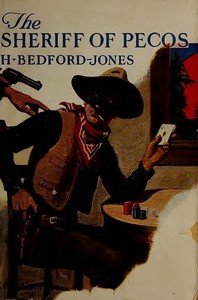
The catalog record for The Sheriff of Pecos — Key Ideas to Explore provides practical reading context through 31,736 words, 2 hr 18 min estimated reading time, and 3 detected text sections.
The text analysis averages about 12.0 words per sentence, while the detected sections provide another way to judge how the source is divided.
Project Gutenberg metadata also associates the work with “Western stories,” connecting these edition facts with the source record’s subject description.
Explore this collection
These alternatives are selected using recorded categories and estimated reading time.
About 168 minutes
Historical Psychological Social Fiction
38,430 recorded words. 30 minutes difference from this book's estimate.
View Gutenberg source #7867About 169 minutes
Historical Psychological Social Fiction
38,785 recorded words. 31 minutes difference from this book's estimate.
View Gutenberg source #39777About 102 minutes
Historical Psychological Social Fiction
23,299 recorded words. 36 minutes difference from this book's estimate.
View Gutenberg source #4638Search stored excerpts and compare books → Choose by your preferences →
Choices use stored catalog measurements. Estimates vary with reading speed. A shared category is a catalog label, not a claim that two books have the same argument or literary quality.
Search reads excerpt text stored with this catalog and links to its associated Gutenberg record. The connection is stored in the site database; this tool does not recheck that every excerpt is word-for-word identical to that external record. Excerpt search does not cover every chapter and does not verify historical publication dates.
Catalog snapshot checked: 2026-09-26. Coverage: 94 public books, 94 available source excerpts.
Calculated from edition completeness, EPUB availability, text structure and catalogue metadata. Not a user rating.
Total of 100 points, scaled to a 2.5-5.0 range. Editions with an empty description or a missing EPUB file are not scored.
Public-domain source text
The source text is kept in the dedicated reader, separate from this catalogue record and its commentary.
The novel opens not with the sheriff but with a stranger in a saloon, listening to Buck and Murphy discuss a struggling ranch owned by Estella Shumway. The dialogue is thick with local grievances: a mortgage, a brother in prison, and a neighbor named Miguel Cervantes. The stranger, initially called Jack Robinson, later reveals himself as Sam Fisher, a man who carries his own mail and a deputy's badge. This layered identity—Robinson versus Fisher—sets up a central tension: who is the real authority in Pecos County?
The first chapter establishes character through voice. Buck’s speech is clipped and aggressive, while Murphy’s is mocking and blunt. The bartender, Galway Mike, reads a newspaper and owns a half-interest in the saloon—a detail that hints at hidden economic ties. The stranger says nothing until he acts. This economy of dialogue forces the reader to infer alliances from tone and gesture. When Buck mentions Miguel Cervantes, the stranger’s silence becomes conspicuous. The saloon setting, with its bar and corner table, becomes a stage for power plays that will unfold later.
In the sheriff’s office, the protagonist drops his alias. He shows Tracy his mail and badge, revealing he is Sam Fisher, not Jack Robinson. This moment is pivotal: the name change signals a strategic unmasking. Fisher’s calm demeanor contrasts with Tracy’s bluster. He offers Tracy a way out—take Murphy to the railroad for a reward—while seizing local authority. The telegram about Murphy, worth three hundred dollars, is a concrete object that shifts the balance of power. Fisher’s line, “Sam Fisher has drawn cards in this game,” uses poker imagery to frame the conflict as a calculated gamble.
Two threads converge: the financial ruin of the Shumway ranch and the murder of Miguel Cervantes. Fisher tells Tracy that Cervantes was shot twice in the back. The victim’s name, shared with the author of Don Quixote, is an unusual choice for a Western. The mortgage from a Laredo County bank and the missing cattle point to a systematic dispossession. Fisher’s claim that he will attend the funerals and that one killer is dead, another in his custody, suggests he has already taken action offstage. These details build a world where law and property are intertwined, and violence is a tool of economic control.
The excerpts break off before the resolution. The reader knows Fisher has a plan, but not its outcome. The title character, the Sheriff of Pecos, may be Tracy or Fisher—or someone else. The opening chapters establish a pattern: identities are fluid, alliances shift, and the landscape is dotted with unseen players like Templeton Buck. The reader should watch for how Fisher’s dual identity plays out, whether the mortgage is paid, and what role the murdered Cervantes’ widow might take. The story is built on withheld information, so paying attention to what characters don’t say is as important as what they do.
This Western departs from simple good-versus-evil by embedding its conflict in economic details—mortgages, rewards, and land rights. The reader is invited to track the precise use of names and documents, as they are the tools of Fisher’s strategy. The excerpts suggest a story where the law is a weapon, not a shield, and where the sheriff’s badge may change hands before the final page.
Reading about Sam Fisher’s slow unraveling of Pecos’s secrets, I remembered a dusty afternoon in my grandfather’s study, tracing maps in The Trail of the Goldseekers: A Record of Travel in Prose and Verse — Story, Setting & Ideas. Both books hold that same patient quiet—not shouting about justice or gold, just watching people walk toward their fates, one dusty step at a time.
A brief reflection can help important ideas stay with you longer.