About 339 minutes
The Valley of Silent Men: A Story of the Three River Country — Reading Notes
Adventure Picaresque Fiction
77,805 recorded words. 3 minutes difference from this book's estimate.
View Gutenberg source #4707
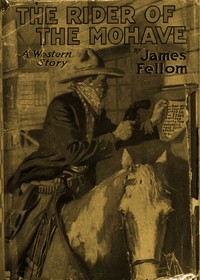
For The Rider of the Mohave: A Western Story — Themes and Context, the stored edition analysis reports 78,550 words, 5 hr 42 min estimated reading time, and 26 detected text sections.
The text analysis averages about 15.7 words per sentence, while the detected sections provide another way to judge how the source is divided.
Project Gutenberg metadata also associates the work with “Western stories,” connecting these edition facts with the source record’s subject description.
Explore this collection
These alternatives are selected using recorded categories and estimated reading time.
About 339 minutes
Adventure Picaresque Fiction
77,805 recorded words. 3 minutes difference from this book's estimate.
View Gutenberg source #4707About 333 minutes
Adventure Picaresque Fiction
76,551 recorded words. 9 minutes difference from this book's estimate.
View Gutenberg source #42532About 328 minutes
Adventure Picaresque Fiction
75,377 recorded words. 14 minutes difference from this book's estimate.
View Gutenberg source #65675Search stored excerpts and compare books → Choose by your preferences →
Choices use stored catalog measurements. Estimates vary with reading speed. A shared category is a catalog label, not a claim that two books have the same argument or literary quality.
Search reads excerpt text stored with this catalog and links to its associated Gutenberg record. The connection is stored in the site database; this tool does not recheck that every excerpt is word-for-word identical to that external record. Excerpt search does not cover every chapter and does not verify historical publication dates.
Catalog snapshot checked: 2026-09-26. Coverage: 94 public books, 94 available source excerpts.
Calculated from edition completeness, EPUB availability, text structure and catalogue metadata. Not a user rating.
Total of 100 points, scaled to a 2.5-5.0 range. Editions with an empty description or a missing EPUB file are not scored.
Public-domain source text
The source text is kept in the dedicated reader, separate from this catalogue record and its commentary.
The Rider of the Mohave opens not with a hero's introduction but with a fugitive's farewell. In the dark kitchen of a Geerusalem store, Jerome whispers to his mother, 'Don't you worry, ma. I'll be droppin' round again, two weeks from to-night—sure's sic 'em!' The dialogue immediately establishes a colloquial, regional voice—'oughter've,' 'ketch,' 'scootin''—and a world where lawlessness is routine. The camp stays awake for 'undug gold,' while coyotes wail across Soapweed Plains. Fellom's prose leans into sensory detail: the 'white apron and snowy hair' of the mother, the 'shadowy form' of the son. This prologue sets a tone of peril and intimacy, hinting at a story where personal bonds are tested by the brutal economics of a mining frontier.
Fellom's characters speak in a vernacular that feels both authentic and deliberate. Jerome's 'sure's sic 'em!' and Lex's 'He's like a mosquito—he stings one time too many' are not just colorful; they reveal class and region. The dialogue carries the rhythm of speech from the 1920s pulp Western tradition, but Fellom avoids parody. When Dot declares, 'Billy Gee is alive,' the clipped, dramatic phrasing shifts the scene's tension. The author also uses dialect to differentiate characters: Mother Liggs speaks with emotional directness ('my heart's just breaking'), while Lex Sangerly adopts a more measured, almost literary tone ('The career of a bad man is usually short'). This contrast in voice underscores the social layers within Geerusalem—from the fugitive's mother to the mining engineer.
Fellom builds menace not through explicit violence but through reported threat. Mother Liggs describes Quintell as 'a big, horrible, poisonous spider,' and explains that his gang controls 'the constable and the courts.' The author lets the reader infer the brutality: 'If Quintell can't crush him to the wall, ruin him, run him out of camp, he has his throat cut; the buzzards finish him.' The passive construction ('it's all done quietly') amplifies the sense of a system, not just a villain. Lex's response—'He'll meet the wrong man—at the right time'—introduces a counter-theme of inevitable justice. The excerpts do not show Quintell directly, only his reputation, which makes him more ominous. Fellom's choice to keep the antagonist offstage in these passages builds suspense through hearsay and implication.
The camp of Geerusalem is drawn in broad, impressionistic strokes: 'too much undug gold in the hills; it was too handy—too easy come, easy go.' Fellom uses repetition and short clauses to evoke a place of restless energy. The desert outside is 'desolate Soapweed Plains,' where the coyote's 'yelping wail-bark' punctuates the night. This contrast between the rowdy camp and the empty landscape creates a frontier dichotomy: civilization as a thin, corrupt veneer over a harsh environment. The author does not linger on panoramic description; instead, he embeds setting in action. The 'back door of a little store' opening into a 'dark' kitchen and 'dark' yard is a liminal space between domesticity and flight. Later, the 'hills' of Chapter XIV promise both refuge and danger, though the excerpt cuts short. Fellom's geography is functional, not decorative.
The dedication—'To those who, having paid the penalty for their misdeeds, seek to regain their places in the ranks of the law-abiding'—frames the novel as a story of second chances. Jerome's lament, 'Too late, ma. I oughter've quit 'fore I begun,' suggests a character trapped by past choices. Yet the plot mechanics, glimpsed in Dot's return of stolen money and her demand to 'exonerate my father,' introduce a legal-moral puzzle. Fellom does not present clear heroes: Lex Sangerly is both a victim of theft and a potential enforcer of corporate justice. The excerpts avoid simple good-versus-evil binaries. The 'ridiculous charge' against Dot's father and the revelation that 'Billy Gee is alive' complicate the narrative. Readers are left to weigh loyalty, legality, and survival in a camp where the law is bought and sold.
Fellom's prose rewards attention to its rhythms and omissions. The excerpts offer no resolution—only a fugitive's promise, a mother's grief, and a stack of recovered bills. Readers should watch how the author handles the gap between what characters say and what they do, and how the desert itself becomes a silent witness. The Rider of the Mohave is a Western that trusts its audience to read between the gunshots.
Reading about the rider’s quiet passage through Geerusalem’s dust reminded me of another solitary figure, one who moves against the current of a harsh land rather than with it. That same ache for a private redemption, the weight of a secret carried alone under an indifferent sky, lingers in The Barrier — A Closer Reading. It feels like the same sunset, just viewed from a different ridge.
Capture what you thought, learned, and would like to remember.
![Cover of Last of the Great Scouts: The Life Story of William F. Cody ["Buffalo Bill"] — Context and Discussion](https://inesb.com/storage/media/covers/pg1248.jpg)








