

Margaret Fuller (Marchesa Ossoli) by Julia Ward Howe
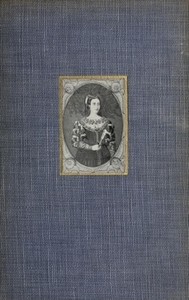
Julia Ward Howe, famous for penning 'The Battle Hymn of the Republic,' turns her attention to a friend and fellow intellectual trailblazer: Margaret Fuller. This book is Howe's effort to capture the spirit and impact of a woman she deeply admired. We follow Fuller from her intense childhood studies in Cambridge, through her groundbreaking role as the first editor of The Dial magazine, and into her vibrant life among the Transcendentalists in Concord. The story doesn't shy away from her bold move to New York as a columnist for Horace Greeley's Tribune or her daring journey to Europe as a foreign correspondent. It culminates in her personal life in Italy during its revolution, her secret marriage, and the final, devastating shipwreck that claimed her life just as she was returning to America with her family and a manuscript about the Italian revolution.
Why You Should Read It
This book feels special because it's written by someone who was actually there. Howe isn't a distant historian; she's a peer telling us about a friend. You get a sense of Fuller's electric personality—her fierce conversations, her uncompromising mind, and the sheer force of her will to live and write on her own terms. Howe paints a picture of a woman constantly pushing against the limits of what society said a woman could be or do. The themes are incredibly relevant: the fight for a woman's voice to be heard, the struggle to balance intellectual ambition with personal life, and the cost of being radically independent in a conformist age. Reading it, you realize how modern Fuller's struggles feel.
Final Verdict
This is a perfect pick for anyone who loves discovering 'lost' figures from history, especially powerful women whose stories were nearly erased. It's great for fans of the Transcendentalist era who want a more personal, ground-level view of that circle, beyond just Emerson and Thoreau. Because it's written in the 1800s, the language has a classic flavor, but Howe's direct and admiring tone keeps it engaging. You’ll come away feeling like you've been introduced to one of the most compelling minds of the 19th century, by another one. It's a tribute, a recovery, and a fascinating read all in one.
This title is part of the public domain archive. You can copy, modify, and distribute it freely.
Sandra Harris
11 months agoGreat reference material for my coursework.
Ashley Martinez
2 months agoFive stars!
Daniel Thompson
10 months agoUsed this for my thesis, incredibly useful.
James Nguyen
5 months agoThe layout is very easy on the eyes.



Thomas Moore
9 months agoAfter a thorough walkthrough of the table of contents, the author clearly has a deep mastery of the subject matter. It cleared up a lot of the confusion I had previously.