
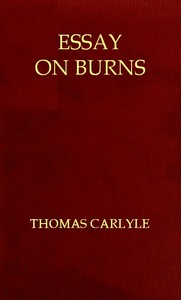
Essay on Burns by Thomas Carlyle
Let's be clear from the start: this isn't a straight biography. If you're looking for a dry timeline of Robert Burns's life, you'll be surprised. Thomas Carlyle's Essay on Burns is something much more interesting—it's a character study, a cultural critique, and a fiery defense all rolled into one.
The Story
Carlyle sets out to rescue Burns from what he sees as a condescending fate. In the decades after the poet's death, a popular image had formed: Burns the simple, heaven-taught plowman, a natural talent who sang sweet songs. Carlyle hates this. He paints a different picture. He shows us Burns as a true genius—a man of powerful intellect and even more powerful feeling, born into a life of hard farm labor and social limitation. The 'story' is the collision between this immense inner world and the harsh outer world. Carlyle walks us through the brilliance of the poetry, sure, but he focuses on the man's struggles: his battle with poverty, his turbulent emotions, and the societal pressures that ultimately wore him down. It's the story of a bright flame burning in a damp, confining space.
Why You Should Read It
You should read this because it makes you think differently about fame, art, and how we remember people. Carlyle doesn't let you stay comfortable. His writing is intense, sometimes difficult, but always alive. He forces you to see the cost of genius. When he describes Burns's frustration, you feel it. He argues that real greatness isn't pretty or easy; it's often messy and painful. More than just being about Burns, the essay asks big questions: What does society do to its extraordinary people? Do we simplify them to make ourselves feel better? Carlyle's passion is contagious. Even when you might disagree with him, you're engaged in the argument.
Final Verdict
This is for the reader who likes their non-fiction with a pulse. It's perfect for anyone interested in Scottish history, poetic genius, or the messy business of legacy. If you enjoy writers who have a strong, uncompromising point of view—someone who argues with the page—you'll find Carlyle fascinating. It's not a light read, but it's a short and powerful one. Come for the insight into Robert Burns, but stay for Carlyle's electrifying and deeply human defense of a complicated soul.
This content is free to share and distribute. Thank you for supporting open literature.
Emily Thompson
6 months agoThought-provoking and well-organized content.
Joshua King
2 years agoHaving read this twice, the storytelling feels authentic and emotionally grounded. Highly recommended.
Jennifer Harris
1 year agoVery helpful, thanks.
Andrew Torres
11 months agoThe index links actually work, which is rare!


Elizabeth Brown
1 year agoI was particularly interested in the case studies mentioned here, the nuanced approach to the central theme was better than I expected. I feel much more confident in my knowledge after finishing this.